The Pricing Engine: A UX Strategy to Solve Cognitive Overload in B2B Jewelry Design
Replacing spreadsheets with a live pricing engine that automates tariff calculations and helps field sales quote faster.
Company
Jewelry Company
My Role
Solo UX Designer & Researcher, built with the Product Development team lead
Tools
Figma Builder.io Excel VSC - Claude Code Claude Code-MCP
Timeline
Live, used daily
Challenge
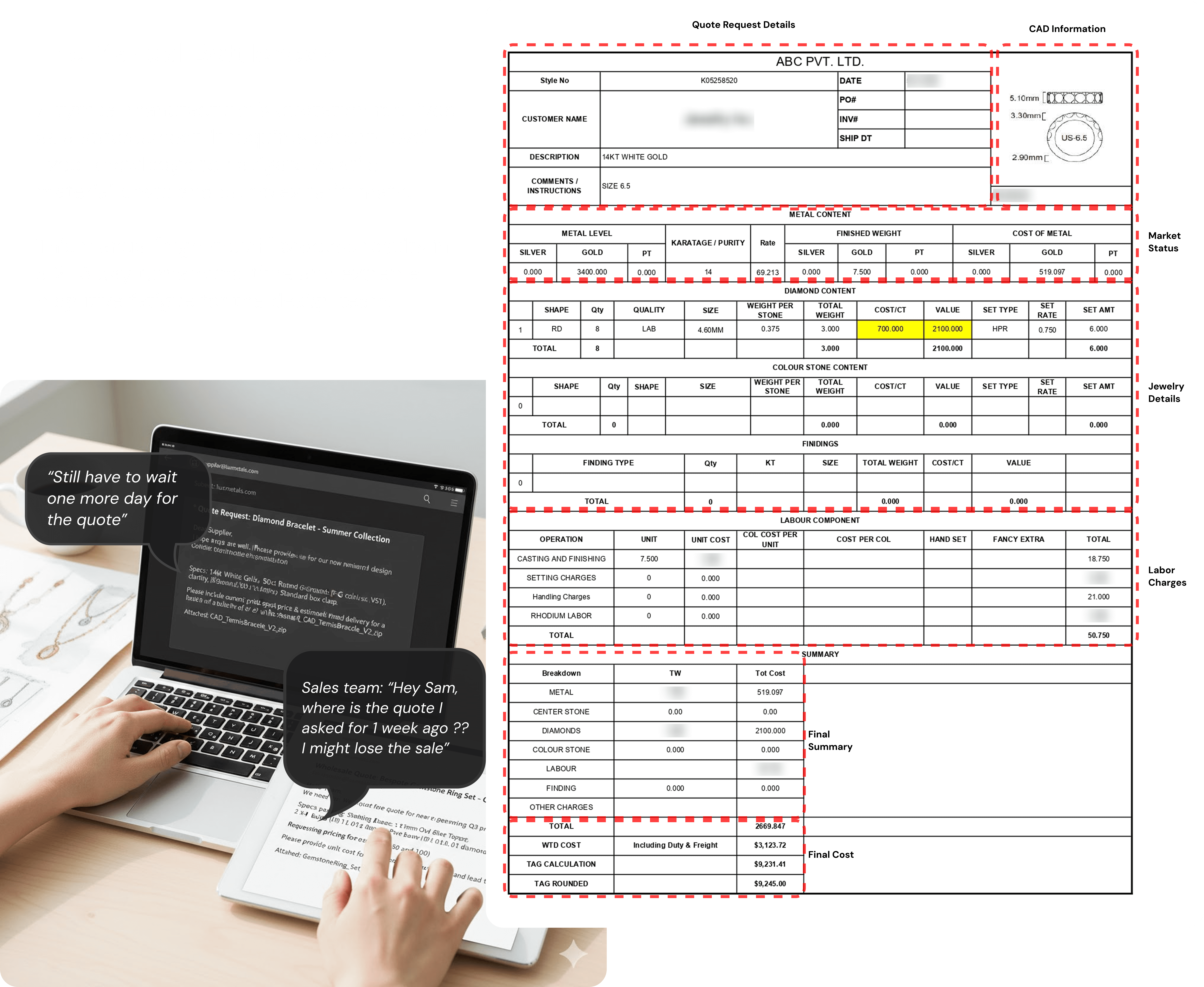
When US tariffs spiked in March 2025, pricing jewelry turned into guesswork. The Product, MIS, and Sales teams were each working in their own spreadsheets, and a single price quote took a full week. Retailers were losing patience, and sales were dropping.
impact
Speed: Quote turnaround dropped from 1 week to 2 days (about 71% faster).
Sales: Sales conversion increased by 15%.
Pricing: More accurate calculations lowered prices by 5%, making products more competitive.
Adoption: PriceHub is live and used daily by 15 team members.
Delivery: An AI assisted workflow cut design to development handoff from 2 weeks to 5 days.
Problem
Pricing jewelry depends on metal weight and daily market rates. After the March 2025 US tariff hike, those calculations changed constantly, and no one had a reliable number.
The Core Issues:
Operational Silos: Product, MIS, and Sales worked from separate manual spreadsheets.
The Bottleneck: For any price change or new product, MIS had to wait for the Design team to recalculate costs by hand.
The Business Cost: Simple quotes took a full week. Retailers lost patience, sales dropped, and the Sales team had no data to answer them.
The Hypothesis: If we replace separate spreadsheets with one central pricing source that calculates from live data, we can remove human error and win back retailer trust.
The Before
The Process
I started with research into how each team actually handled pricing, then moved into design, development, and testing.
Phase A: Research & Discovery
I ran interviews and journey mapping with three departments to understand where the process was breaking.
MIS Team: Estimated new prices by applying rough percentages to old data, because there was no central source.
Product Team: Stuck coordinating margins with multiple vendors by hand.
Sales Team: Could not answer retailer questions about cost, which led to lost orders.
I used what I learned to map how each team thought about pricing, and that mental model shaped the first flows.
The Insight: The root cause was not the tariffs. It was the lack of accurate, shared information.

Phase B: Design & Development Strategy
Working with the Product Development team lead, we split the solution into three phases:
Digitization: A digital tool to standardize vendor data and move teams off local spreadsheets.
Integration: Connected the tool to our ERP for design data and to Kitco.com for live precious metal rates, so the system calculates Price = Live Metal Rate + Vendor Margin + Tariff.
Inventory Management (ongoing): Connecting sales and purchase orders for a full stock view.
How AI Helped
I used Claude Code with MCP to convert our Excel pricing logic and formulas into working code. It also helped identify gaps in how we were pricing jewelry, which is where the 5% price correction came from.
With Builder.io, I pushed my Figma designs directly into the production codebase instead of handing developers static files. This cut design to development handoff from 2 weeks to 5 days and improved design to dev accuracy by 35%.
I presented this workflow to leadership through a live clickable prototype, and it now guides how we build new flows.
Phase C: Testing & Iteration
The first round of testing ran for 3 weeks with the Product team, and adoption was slow.
The Challenge: The team was used to the flexibility of Excel and resisted a more structured tool.
The Fix: I adjusted onboarding to focus on speed and accuracy, connecting their old manual steps to the new automated flow.
The Insight: People give up flexibility only when they can clearly see what they get in return. Here, that was speed and accurate numbers.
The Solution
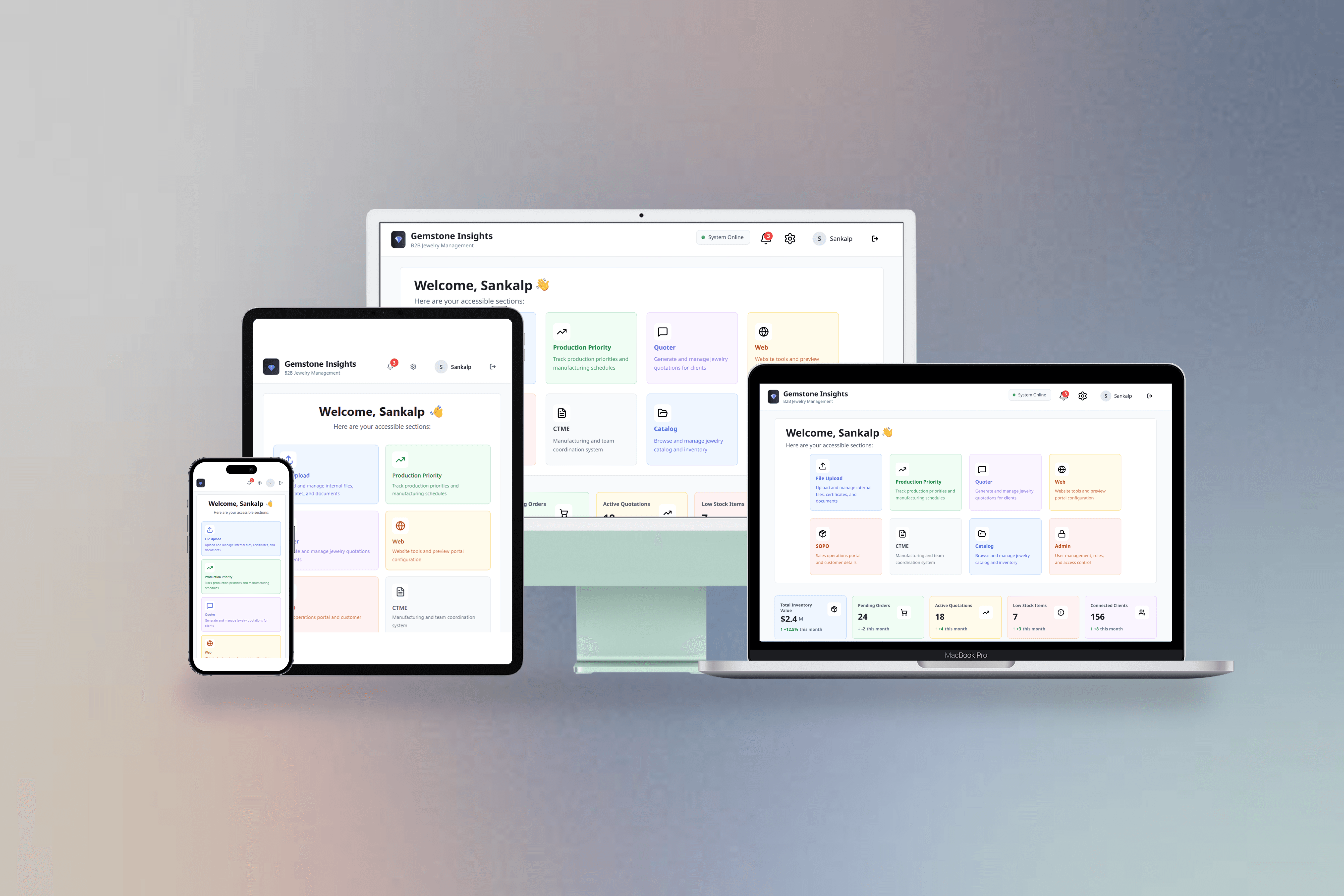
We launched PriceHub, a central pricing engine for the whole company.
Key Features:
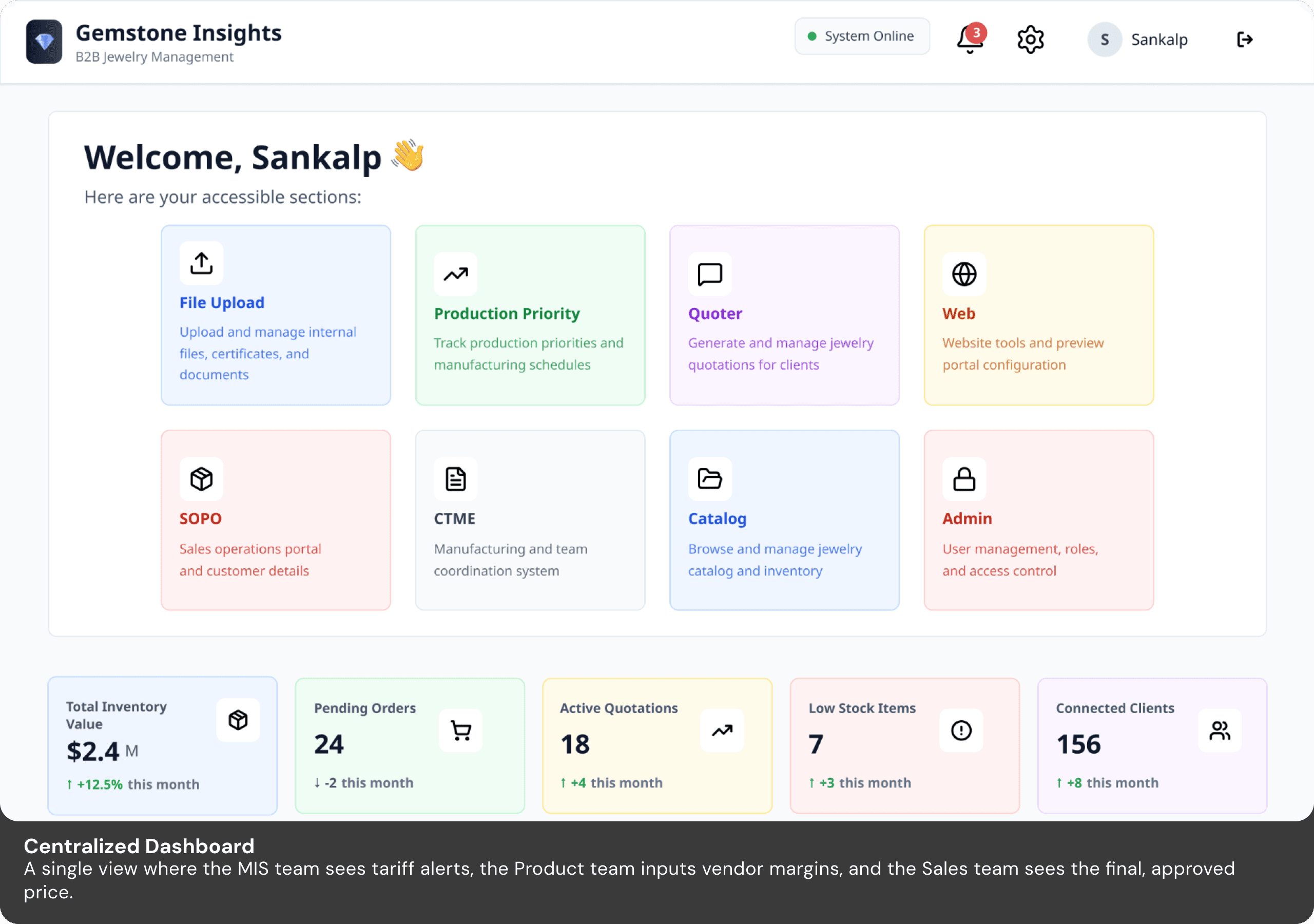
Central Dashboard: MIS sees tariff alerts, Product enters vendor margins, and Sales sees the final approved price, all in one place.
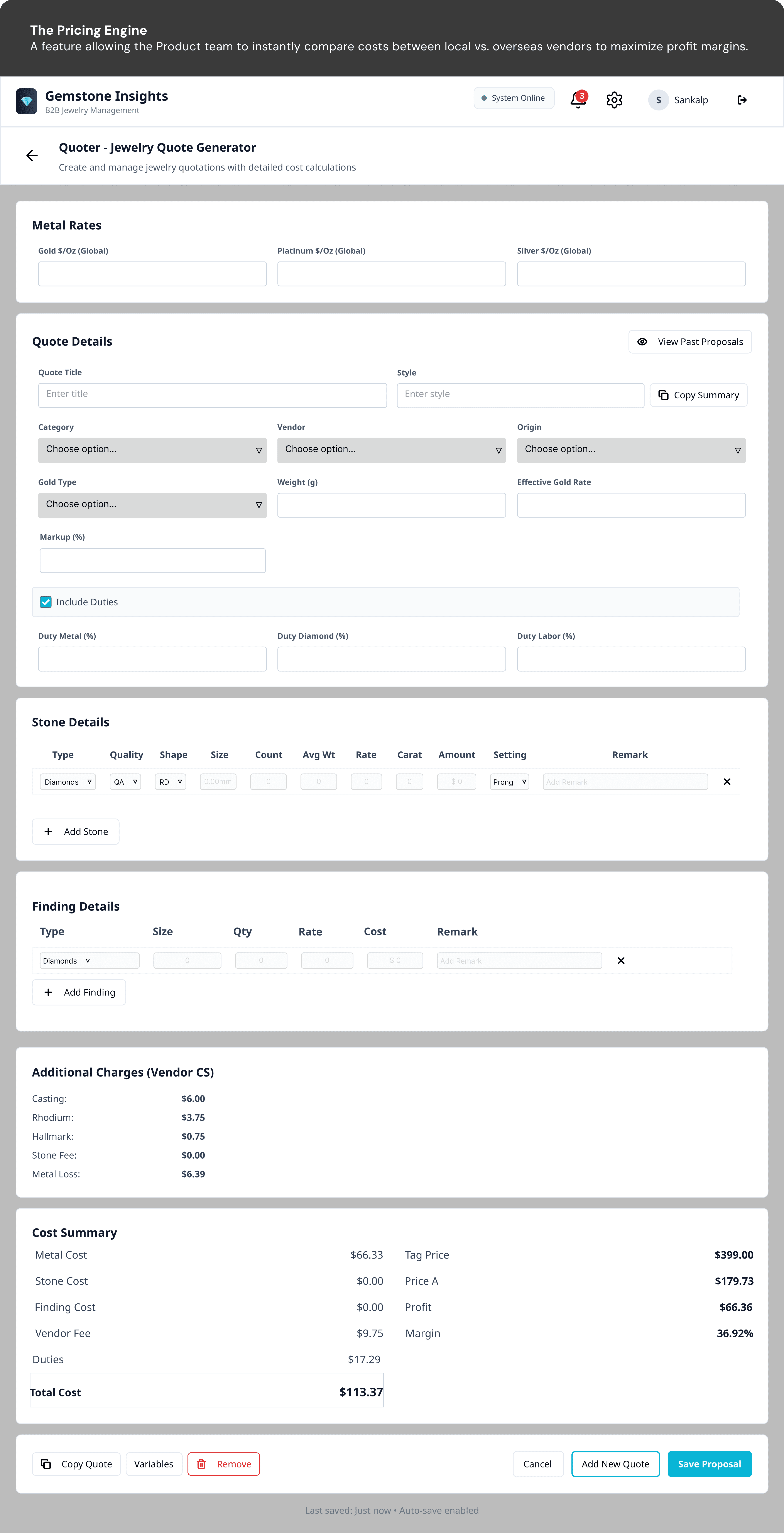
Vendor Comparison: Product can compare local and overseas vendor costs instantly to protect margins.
Live Automation: Prices update automatically with market changes, with no manual recalculation.
After
4. Impact
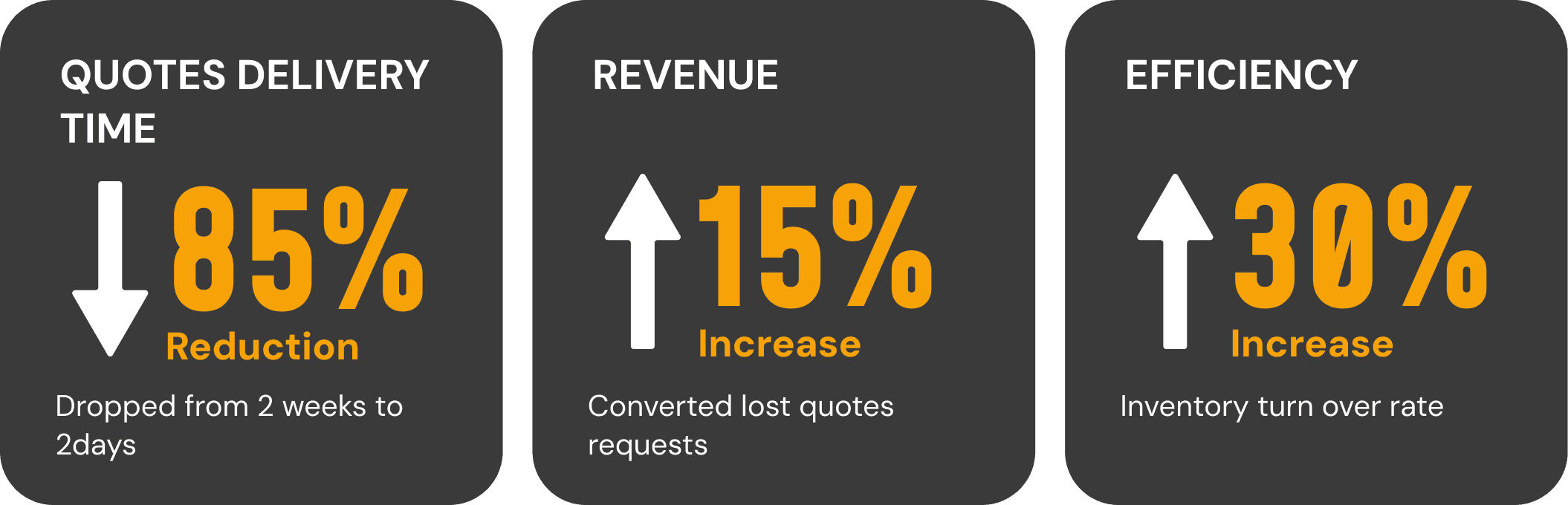
PriceHub is live, and these are measured results.
Speed: Quote turnaround dropped from 1 week to 2 days.
Sales: Sales conversion increased by 15%, because reps could give retailers fast, accurate prices.
Pricing: Prices came down 5% after more accurate calculations exposed inflated costs.
Adoption: 15 team members use PriceHub every day to send quotes and update product pricing.
5. Key Takeaways
1. My real competitor was Excel. People trusted their spreadsheets because they controlled them. The screens mattered less than proving, during testing, that PriceHub gave the right number every time and gave it faster.
2. Accuracy is what earned buy in. Leadership approved the tool after comparing its prices against their own estimates and seeing them match to the cent. That same accuracy showed our old prices were about 5% too high.
3. AI let me build, not only design. Turning Excel formulas into code with Claude Code and pushing Figma designs into production with Builder.io meant I could ship working features myself. As a solo designer, that changed how much I could take on.
4. Internal tools keep growing. PriceHub began as a fix for one pricing problem. It is now shared by MIS, Sales, and Product, and inventory is the next piece we are connecting.